
One doesn’t usually associate a holiday with a splash of marine citizen science projects and yet just a dash of an altruistic attitude could see you making a conscious choice toward environmental improvements for the greater good. How? Quite a few remarkable initiatives are available for guests to partake in when on their next marine-focused adventure.
Read on to discover why being privy to the many ways your holiday could incorporate an environmental protection angle by way of a short (surely you have an hour on hand) yet interesting underwater data collection project, a dedicated sailing voyage geared toward scientific research, or even a simple investigative premise to photographing marine creatures in their natural habitats.
Lady Elliot Island, Queensland
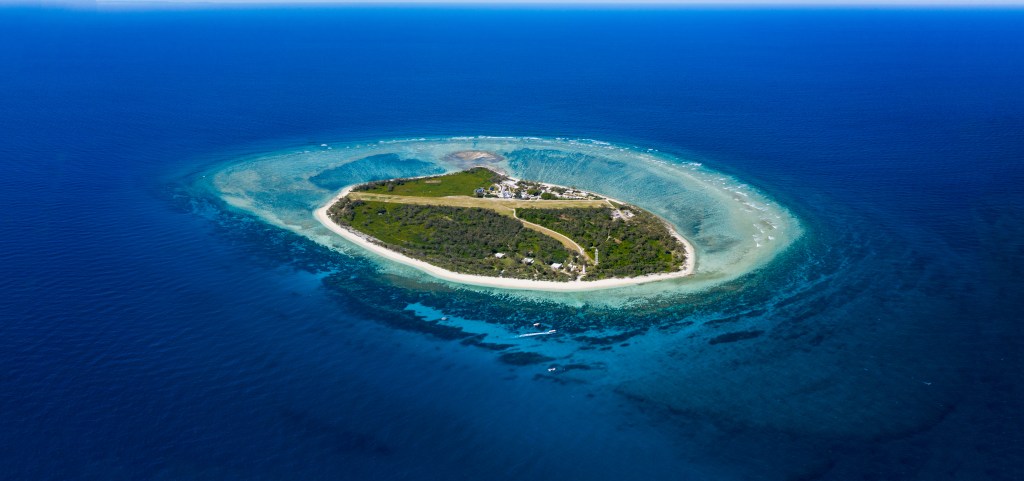
An early leader in the eco-tourism realm, Lady Elliot Island reigns supreme when it comes to implementing sustainable environmental offerings throughout resort operations. The island is within a certified green zone, meaning it’s a ‘look but don’t take’ situation, a conservation area sans fishing, creature/shell collecting, etc.
Here, guests are welcome to join a resident marine biologist and assist with an ‘Eye on the Reef’ survey, which supplies data to the Great Barrier Reef Marine Park Authority as part of the broader Tourism Reef Protection Initiative.
Coral health is paramount to a vibrant reef ecosystem and the nutrient-rich seas are a certified haven for a vast array of marine species. One of the first indicators of a healthy reef is the presence of herbivorous fish; when there are heaps, it’s a good thing because it means they are playing a fundamental role by removing the algae that rob corals of the light and space they need to grow. Noting the different fish is a big part of the survey; the same goes for estimating the number of sea cucumbers littering the white sand sea floor – these guys are another good indicator of a healthy reef system.
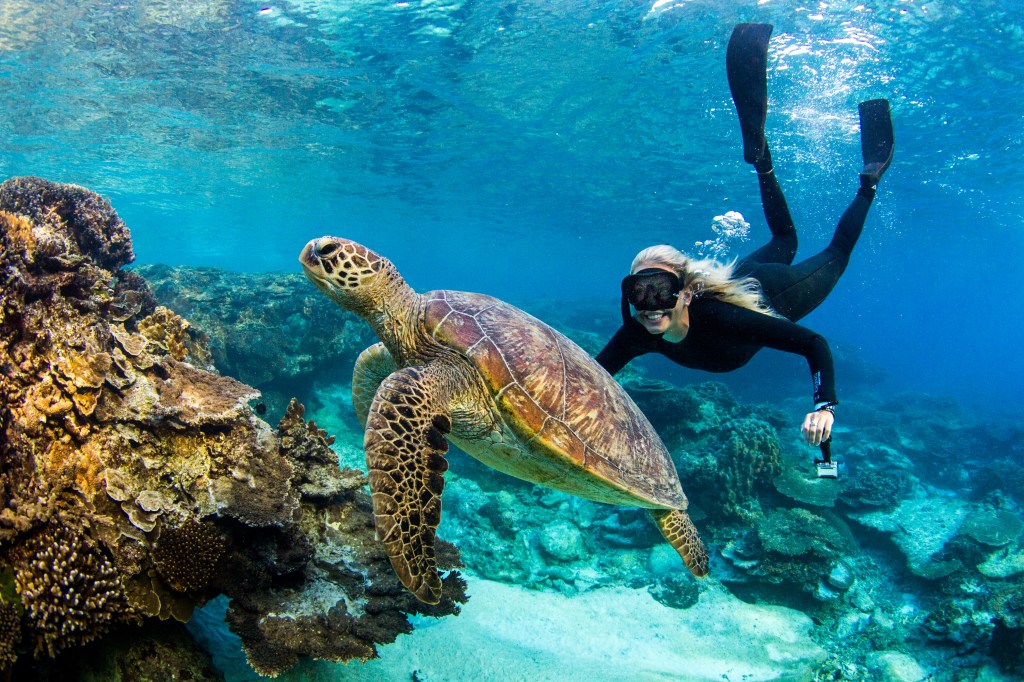
Of course, you’re guided snorkel survey means observing negative issues too. Things like spotting the invasive Crown of Thorns Starfish and having the marine biologist map it to return and remove it are a big deal. Nevertheless, it’s an exhilarating feeling to be swathed by a school of silver trevally and enjoy up-close encounters with loggerhead turtles who are completely unperturbed by us humans.
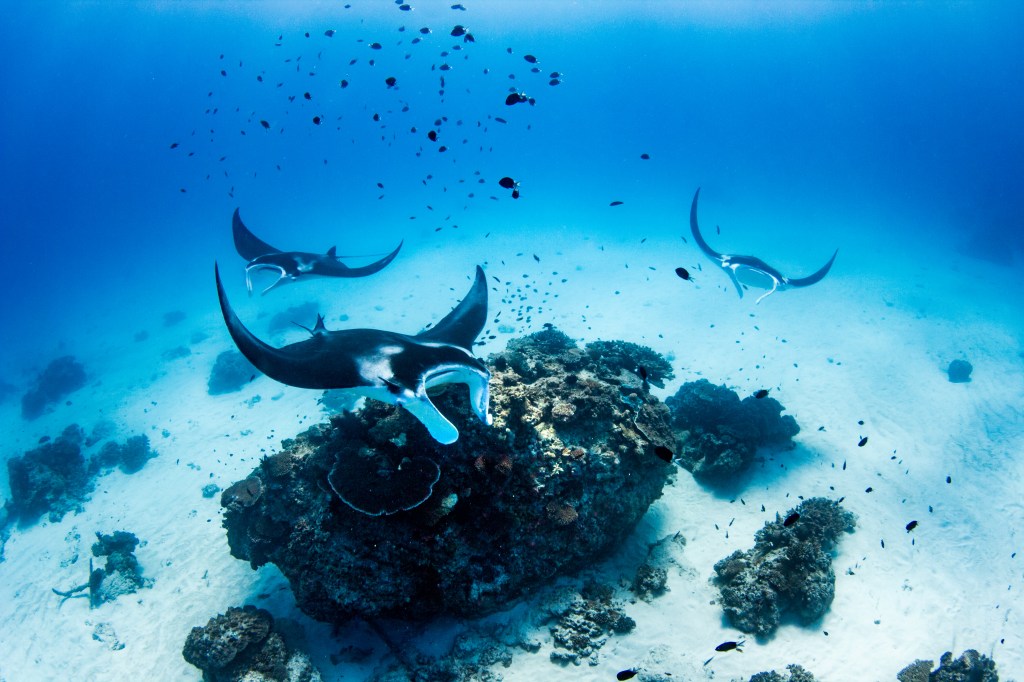
Lady Elliot Island Eco Resort is also an integral part of Project Manta(a multidisciplinary research program based at the University of Queensland) and visiting recreational and professional divers are invited to take photographs of Manta Rays whilst on dive expeditions. Photo-ID is one of the key methods used in research, as individual manta rays can be differentiated by their distinctive markings, which are comparable to human fingerprints.
And asides from your service to citizen science, the thrill of seeing a Manta Ray gliding beneath your flippers (with its 6+ foot wingspan) will surely make your day.
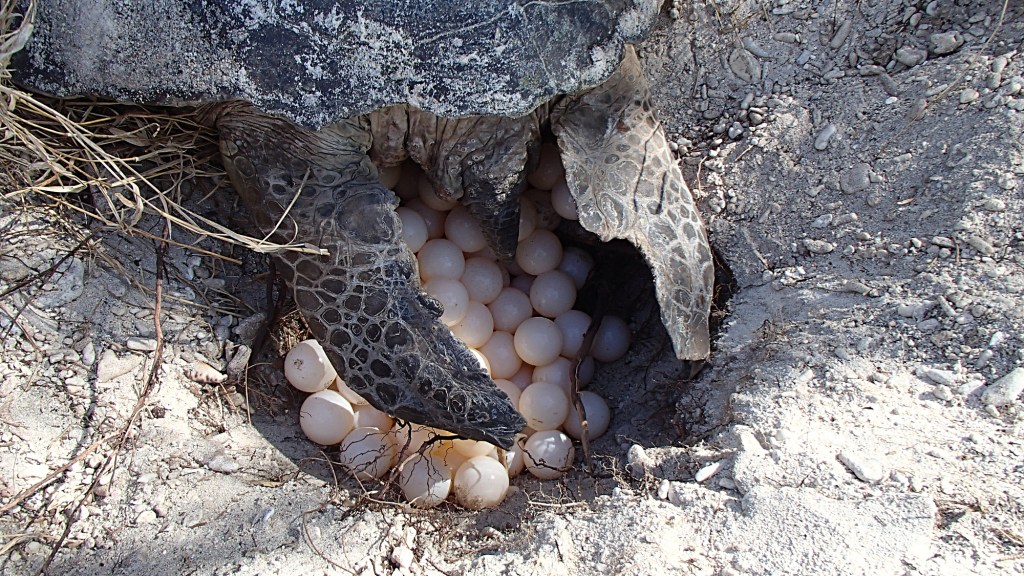
Back on land, guests can see migratory birds resting in the dunes after their extensive flight guided by trade winds to LEI – again nonplussed by humans (for no harm would come to them here). Markers for turtle nests (currently out of season) jut from the fringes of the shoreline and visitors are encouraged to log any new turtle nest sightings with island staff. Over 1000 turtle eggs are laid and maybe 1% will make it; sure nature knows best but if you’re there when it’s happening, I bet you find the time and the inclination to help keep the baby turtles alive.
Fact: The late, great conservationist Steve Irwin adored Lady Elliot Island and was a frequent guest here.
Heritage Expeditions, New Zealand
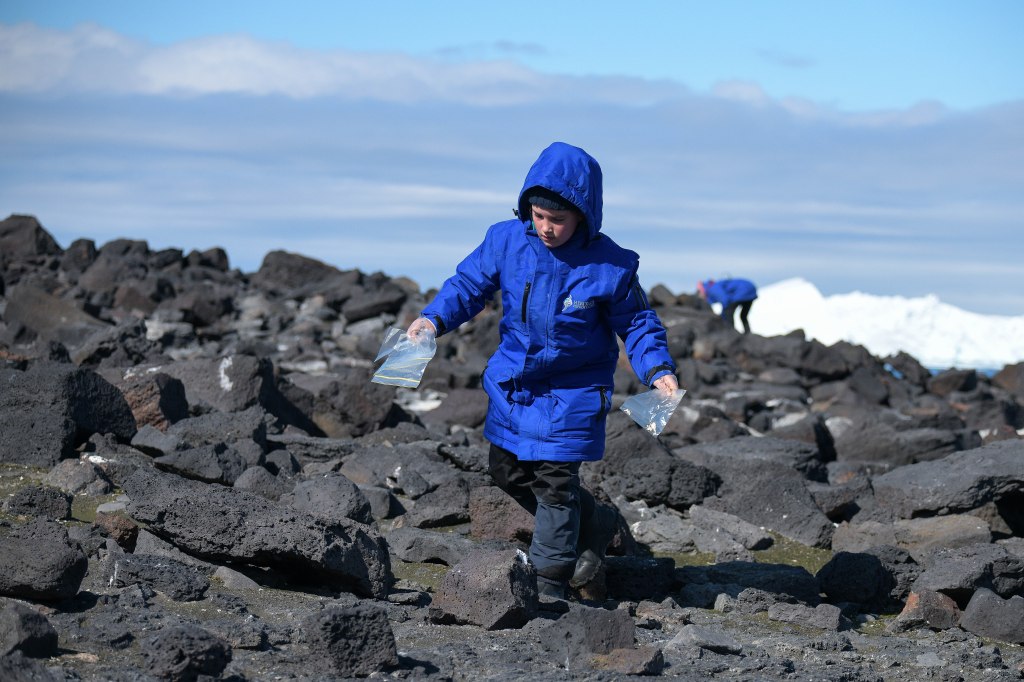
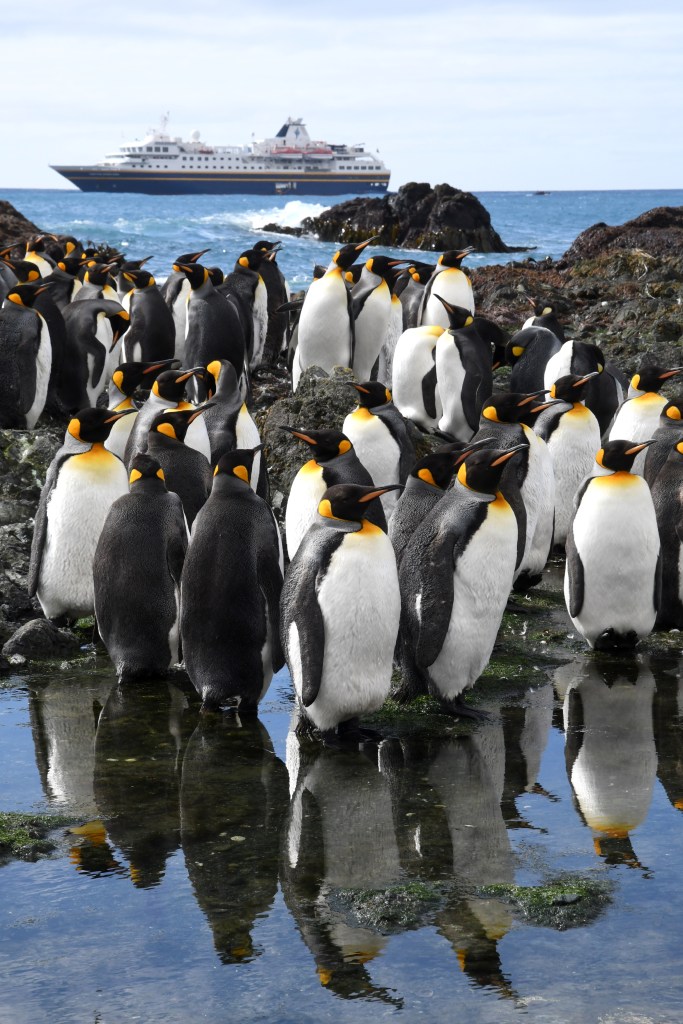
Interactive marine citizen science gets taken to a whole other level with Heritage Expeditions. Join expert scientists aboard a Heritage Expeditions voyage and assist with real science projects! For example, on a recent Ross Sea sailing journey, guests were able to collect water samples and penguin bones for analysis. Interesting, yes?
Another key citizen science task is collecting air flask samples for GNS Science; this helps with the organisation’s ongoing research into the Southern Ocean’s role as the planet’s largest carbon sink and the impact it has on our oceans/planet.
Tim Flannery (Australian paleontologist, environmentalist, conservationist, explorer, author and science communicator) joins their upcoming Indonesian Explorer voyage in October – an expedition that includes a port of call to a rarely visited island where guests may be involved in discovering a new species (on a previous voyage the crew and guests identified several new mammal species on Kofiau Island). Surely this kind of unique experience is where the words science and exciting align together perfectly!
In summary, seeing the growth of citizen science projects morph from a niche tourism experience to something guests vie to be a part of can only be beneficial. Nobody’s asking you to forgo a relaxation sojourn in lieu of a time-consuming oceanic brainiac-themed thing, but whichever of the world waterways you are exploring, it’s certainly worth devoting a few moments to the protection of our living earth. Learning can be fun, especially with a marine citizen science theme, and the act of giving back, however, you can, is ultimately priceless.
 Luxe Surf Style
Leave a comment